Why middlemen control prices — and how farmers take it back
Middlemen set prices on both ends of the food chain. Here's how the markup stack works, what it costs farmers and buyers, and how direct marketplaces change the math.
By FarmPlace Team
Introduction
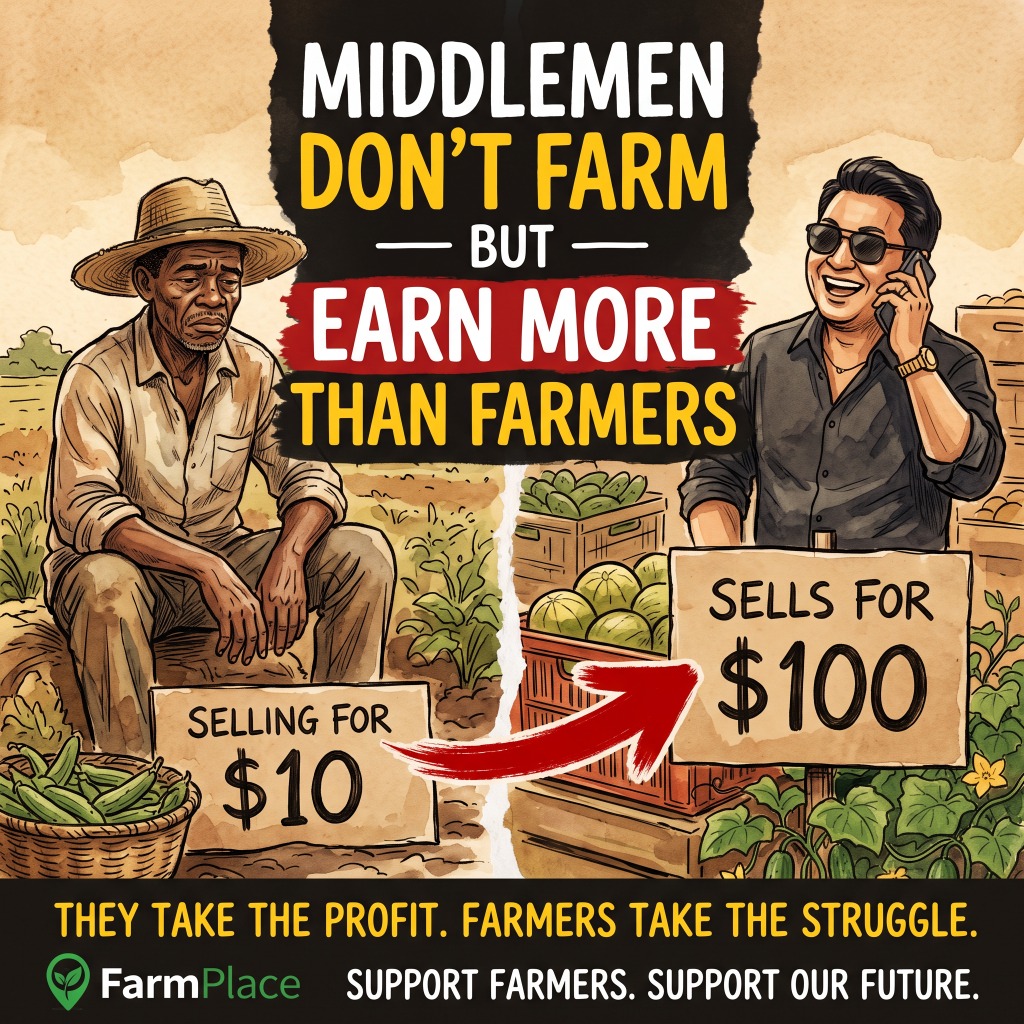
If you've ever wondered why a farmer earns so little for produce that sells for three times the price at market, the answer usually isn't the shop — it's the chain of hands between the field and the shelf.
In local agriculture, middlemen (brokers, aggregators, transporters) play a real role: they move goods, aggregate supply, and absorb risk. The problem isn't that they exist. It's that they set the price on both ends — and nobody else at the table gets a say.
How middlemen set the price
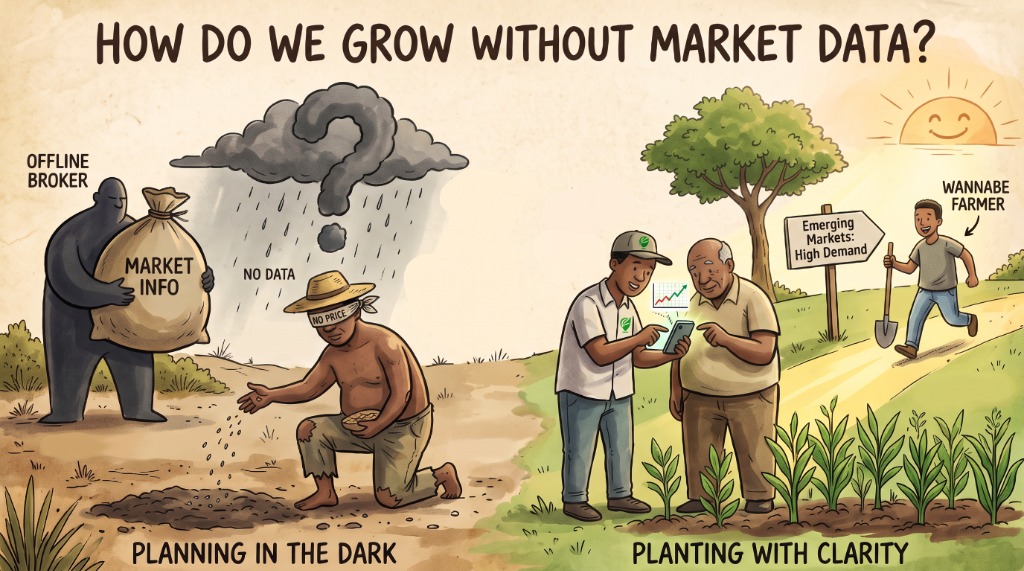
A broker's margin comes from information asymmetry. The farmer doesn't know today's market price; the buyer doesn't know the farm-gate price. The broker is the only one who sees both numbers, so the broker decides the spread.
A typical stack looks like this:
- Farmer sells tomatoes at the farm gate for $0.40/kg
- Broker aggregates and adds transport + margin: $0.75/kg
- Wholesaler adds handling + margin: $1.00/kg
- Retailer shelves it at $1.30/kg
By the time you pay, the farmer's share is under a third of the final price — for doing most of the actual work.
What it costs farmers
Low farm-gate prices don't just shrink income — they remove the ability to plan. When a farmer can't predict what their harvest is worth, they can't decide what to plant next season, whether to invest in feed or irrigation, or when to sell livestock.
"Farmers aren't price takers because they want to be. They're price takers because they can't see the market."
Worse, the broker's offer is take-it-or-leave-it at the worst possible moment: when produce is ripe and perishable. A farmer with a truck full of tomatoes has hours, not days, to accept.
What it costs buyers
Buyers pay the other half of the spread — and get less transparency for it. You can't verify freshness, you rarely know which farm the food came from, and you're paying margins to intermediaries who added no value to the product itself.
Bulk buyers — restaurants, schools, resellers — feel this hardest. Their input costs carry three or four layers of markup before a single meal is cooked.
How direct marketplaces change the math
A direct marketplace doesn't remove logistics — it removes the information monopoly. When a farmer lists produce with a visible price and a buyer can see it, several things happen at once:
- Farmers see demand. Real listings show what buyers actually pay, not what a broker claims the market is doing.
- Buyers see supply. Farm-gate pricing becomes public, and the spread becomes negotiable instead of hidden.
- Both sides can plan. Pre-orders let a farmer sell a batch before it's harvested and let a buyer lock in supply at a known price.
The broker's role doesn't disappear overnight — transport and aggregation are still real jobs. But when prices are visible, those services have to compete on value instead of information.
What you can do today
If you're a farmer: list your next batch early. Buyers pay deposits on future harvests, which turns your field into working capital instead of a gamble.
If you're a buyer: stop asking "what's the price" and start asking "what's the farm-gate price". The difference between the two numbers is the middleman's cut — and now you can see it.
That's the whole point of FarmPlace: put the farmer and the buyer in the same room, and let the price be what both of them agree it is.
Ready to skip the middleman?
Buy direct from local farmers — or sell to buyers who found you. Free on iOS and Android.