Farm marketplace: how buying direct from farmers actually works
A farm marketplace connects buyers straight to the people who grow the food — no brokers, no markup stack. Here's how it works on FarmPlace.
By FarmPlace Team
Introduction
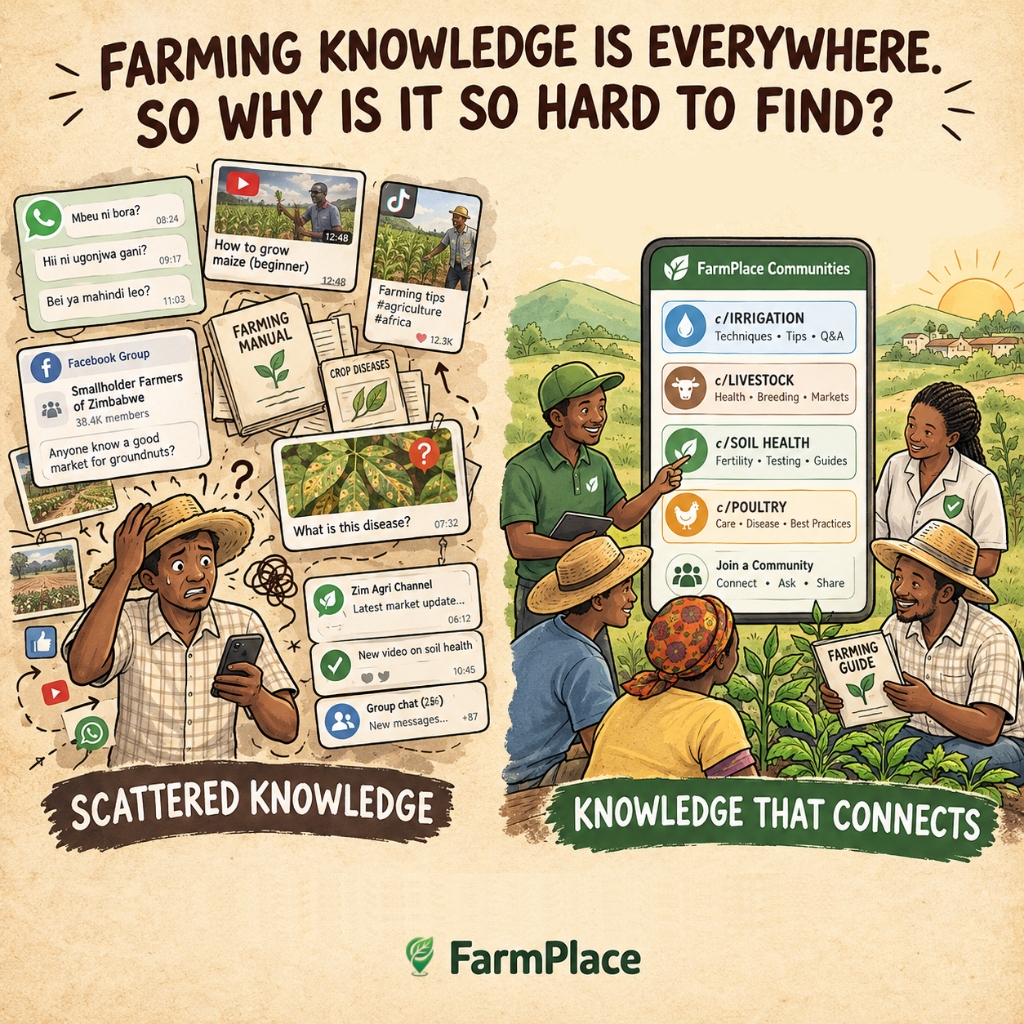
Search for a farm marketplace and you'll find the same promise repeated everywhere: buy food directly from the people who grow it. But what does that actually mean in practice — and why does buying direct change the price, the freshness, and who profits?
A farm marketplace is a platform where farmers list what they're growing or raising, and buyers purchase straight from them. No wholesaler, no broker setting prices on both ends, no mystery about where the food came from.
What is a farm marketplace?
At its simplest, a farm marketplace does three things:
- Lists real supply — farmers post livestock, crops, feed, dairy, and equipment with quantities, prices, and locations
- Connects both sides directly — buyers message the farmer, not a call centre or an agent
- Moves the margin — the spread that used to go to middlemen splits between a better price for the buyer and a better income for the farmer
That's the whole model. Everything else — payments, delivery, quality checks — is plumbing that makes those three things reliable.
How it works on FarmPlace
FarmPlace is a farm marketplace built for local agriculture. A typical flow looks like this:
- A farmer lists a batch — say 500kg of onions ready in six weeks — with a price per kilo
- A buyer finds it through search or AI discovery, chats with the farmer, and reserves a share
- The farmer's video updates show the batch maturing, so trust isn't blind
- At pickup, the balance settles and the produce moves straight from field to buyer
Pre-orders are the engine: farmers get committed buyers before harvest, and buyers lock their price before the market moves.
Farm marketplace vs. the middleman chain
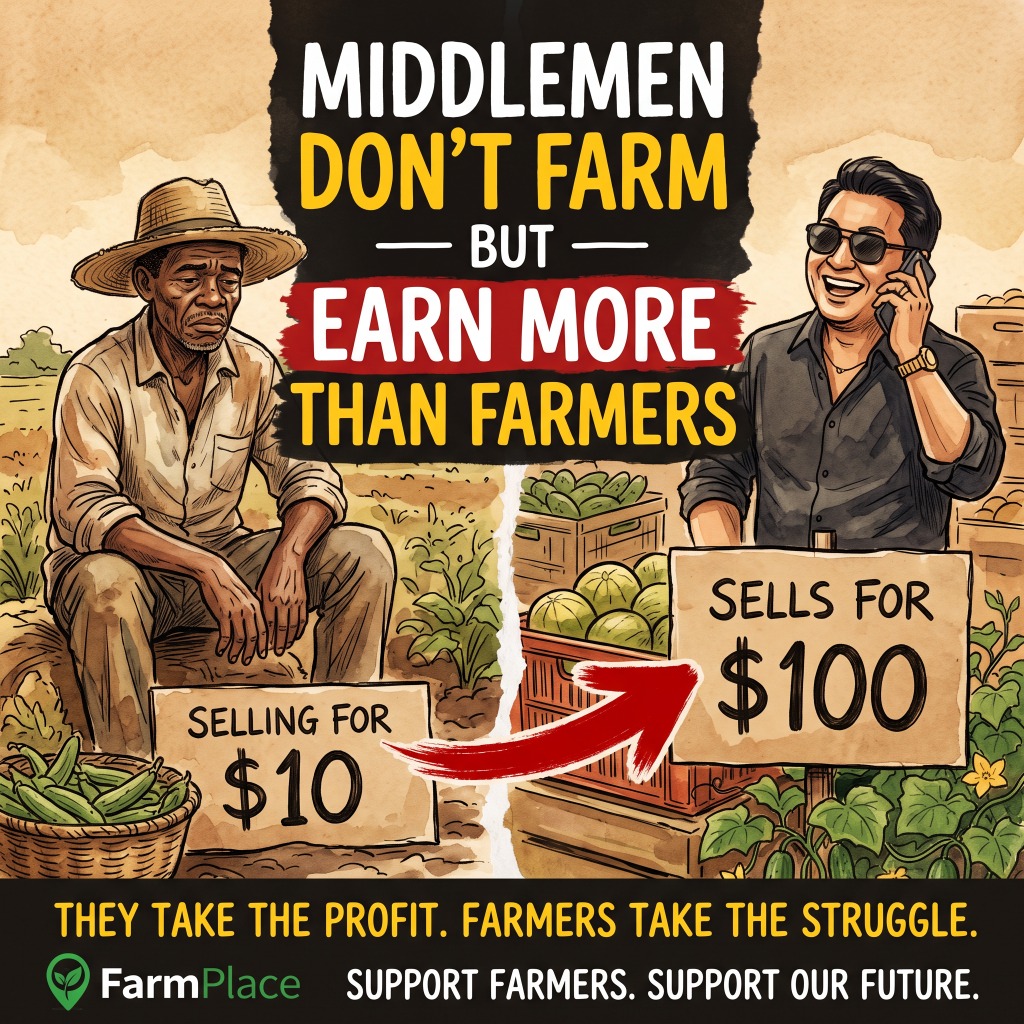
The traditional chain runs farmer → broker → aggregator → wholesaler → retailer, with each hand adding margin. We broke down the full markup stack elsewhere — the short version is that the farmer often keeps under a third of the final price.
A farm marketplace compresses that chain to two parties. The effects compound:
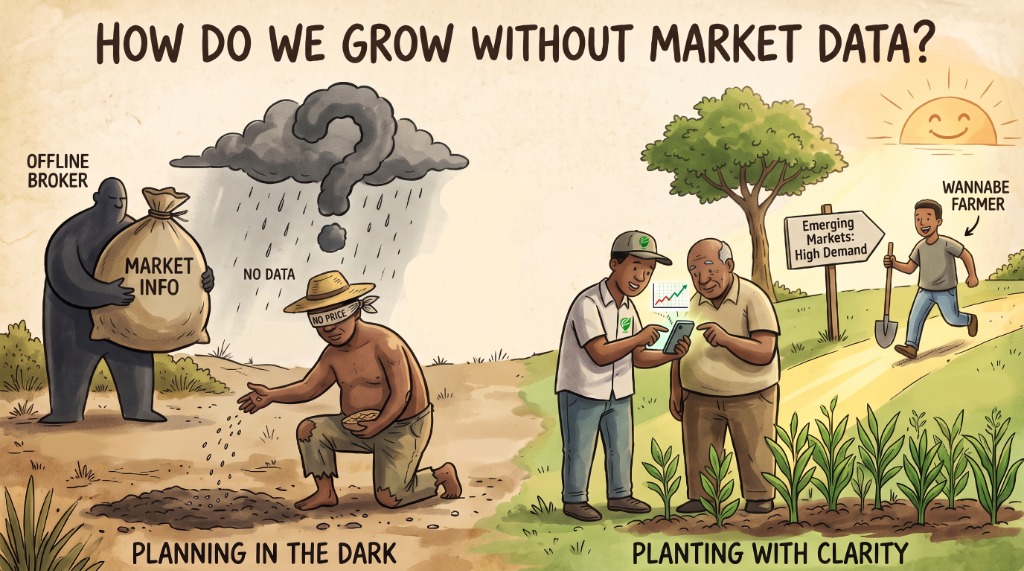
- Farmers see real demand — actual orders, not guesses, shape next season's planting
- Buyers see real supply — you know the farm, the location, and the harvest date
- Prices reflect the product — not the negotiating power of whoever owns the truck
Who a farm marketplace is for
It's not just for households buying a crate of tomatoes. The direct model serves:
- Restaurants and caterers locking in weekly produce supply
- Resellers and small retailers sourcing at near-farm-gate prices
- Farmers buying inputs — feed, seed, equipment, breeding stock — from other farmers
- Transporters finding loads that need moving
Anywhere food changes hands, cutting out the invisible middle changes the economics.
Getting started
Browse the live marketplace to see what's listed near you — livestock, fresh produce, feed, seed, and equipment. Or meet the growers behind it on the farmers directory, where farms post regular video updates from their fields.
If you farm, listing takes minutes: a photo, a quantity, a date, a price. If you buy, the first pre-order is usually the moment it clicks — your food has a name, a farm, and a face attached to it.
The shortest distance between a farm and a buyer should be a conversation, not a supply chain.
Ready to skip the middleman?
Buy direct from local farmers — or sell to buyers who found you. Free on iOS and Android.